
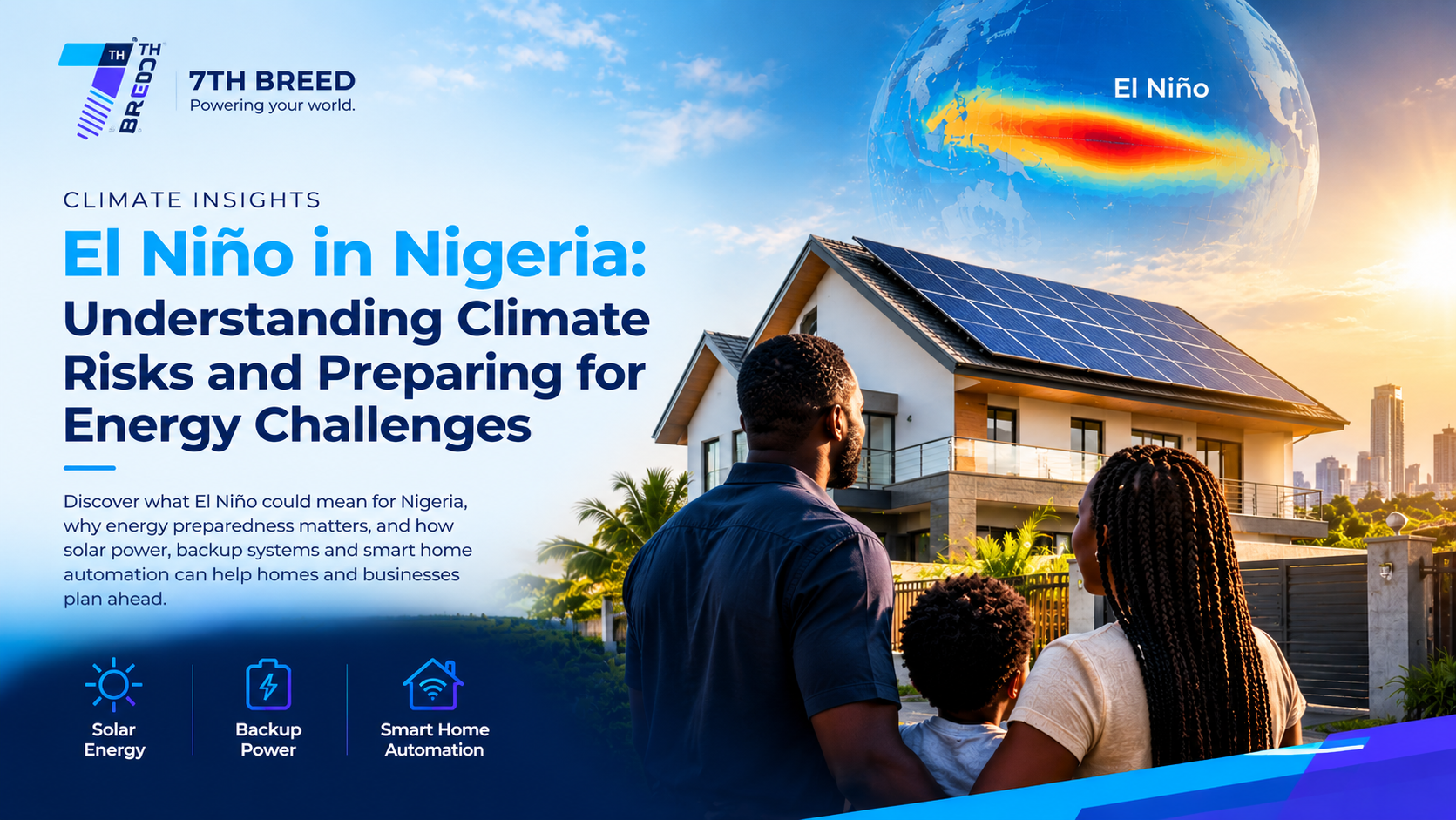
Climate conditions influence how people live, work and manage their energy needs. As El Niño develops across the Pacific Ocean, understanding its potential effects on global weather patterns is becoming increasingly important for households and businesses planning for the months ahead.
According to the World Meteorological Organization (WMO), El Niño was firmly established in 2026 and was expected to strengthen, increasing the likelihood of significant changes in temperature and rainfall patterns in different parts of the world.
For Nigerians, understanding these developments provides an opportunity to think more carefully about climate preparedness, electricity reliability and the role of sustainable energy solutions.
What Is El Niño?
El Niño is a natural climate phenomenon associated with unusually warm sea surface temperatures in the central and eastern tropical Pacific Ocean. It forms part of the El Niño–Southern Oscillation (ENSO), a climate system that influences atmospheric circulation and weather conditions across different regions.
El Niño can affect rainfall, temperature and the frequency of certain extreme weather events. However, its effects differ from one country to another and depend on local climate conditions, the season and other environmental factors.
This means that the presence of El Niño does not automatically guarantee a particular weather outcome in Nigeria. Monitoring forecasts from the Nigerian Meteorological Agency (NiMet) remains essential for understanding local conditions.
How Could El Niño Affect Nigeria?
The effects of El Niño vary across regions, but changes in global climate patterns highlight the importance of preparedness.
1. Changing Temperature and Rainfall Patterns
El Niño can influence seasonal rainfall and temperature patterns worldwide. Depending on regional conditions, these changes may affect agriculture, water availability, household comfort and business operations.
For Nigerian households and businesses, keeping up with local weather forecasts can help inform decisions about water use, building maintenance, cooling requirements and general preparedness.
2. Greater Attention to Electricity Reliability
Electricity is essential for homes, offices, retail outlets, commercial facilities and industrial operations. When businesses depend entirely on a single source of power, interruptions can disrupt productivity, communication, security and customer service.
Although El Niño does not directly mean that Nigeria will experience power outages, preparing for existing electricity reliability challenges is a practical step for any business.
Backup power systems and appropriately designed solar installations can provide alternatives or supplementary sources of electricity, depending on the system configuration and available conditions.
3. Managing Cooling and Energy Consumption
During periods of hot weather, households and businesses may rely more heavily on fans, air conditioning and refrigeration. These appliances can contribute significantly to electricity consumption.
Planning for efficient energy use involves selecting suitable appliances, improving ventilation, maintaining cooling equipment and assessing whether a solar and battery system would be appropriate for the property's energy requirements.
Can Solar Energy Help Nigerian Homes and Businesses Prepare?
Solar energy is one option for improving energy resilience. A properly designed solar power system can generate electricity from sunlight and, when paired with suitable battery storage, supply selected loads when solar generation is insufficient or the grid is unavailable.
The right system depends on several factors, including:
- Daily electricity consumption.
- The appliances and equipment that need to remain operational.
- Available roof or installation space.
- Battery storage requirements.
- Budget, maintenance and expected energy demand.
Solar installations are not identical, and no system should be assumed to power an entire property without an appropriate load assessment.
For businesses, a solar solution may help support essential operations such as lighting, computers, networking equipment and selected security systems. For homes, it may provide power for chosen appliances and other everyday needs.
The Role of Smart Home Automation
Energy preparedness also involves understanding and managing how electricity is used.
Smart home automation can help users control compatible lighting, appliances and other connected systems. Depending on the equipment installed, automation can support scheduled operation, remote control and more convenient energy management.
For example, a business may use automated lighting controls in selected areas, while a homeowner may schedule compatible devices to operate at particular times.
Automation does not automatically reduce electricity bills in every situation. Its effectiveness depends on system design, device compatibility and how the controls are used.
How 7th Breed Consult Supports Smarter Energy Planning
At 7th Breed Consult, we work across solar installations, smart automation and technology solutions to help homes and businesses explore practical ways to meet their operational needs.
Our approach focuses on understanding the requirements of each property or business before identifying suitable solutions.
Whether the priority is improving power availability, exploring solar energy, integrating compatible smart-home systems or planning a more connected property, proper assessment is an important starting point.
Rather than waiting for an energy challenge to interrupt everyday activities, property owners can evaluate their current systems and identify areas where improvements may be worthwhile.
Explore the services available through 7th Breed Consult to learn more about our solutions for homes and businesses.
Practical Steps to Improve Energy Preparedness
You do not need to wait for a particular climate event to review your energy needs. Consider the following steps:
- Assess your electricity consumption. Identify the appliances and equipment that use the most energy.
- Prioritise essential loads. Decide which systems must remain operational during an interruption.
- Explore suitable backup options. Compare solar, battery storage and other appropriate solutions based on your requirements.
- Improve energy efficiency. Maintain appliances, use efficient lighting and avoid unnecessary electricity consumption.
- Monitor reliable weather information. Follow updates from NiMet and other authoritative climate information sources.
- Seek a professional assessment. Ensure that any proposed solar, battery or automation system matches your actual needs.
Conclusion
El Niño is an important climate phenomenon, but its consequences are not identical everywhere. For Nigeria, reliable local forecasts are essential for understanding what changing global conditions may mean for specific communities and businesses.
At the same time, energy preparedness remains valuable regardless of the climate outlook. Solar power, suitable backup systems and smart automation can all play a role in helping homes and businesses manage their energy needs.
With careful planning and the right technical guidance, property owners can make more informed decisions about reliability, efficiency and long-term energy requirements.
Ready to explore solar energy or smart automation for your property? Visit 7th Breed Consult to learn more about our services.
References
- World Meteorological Organization (WMO), El Niño set to become very strong, raising risks of extreme weather into 2027.
- Nigerian Meteorological Agency (NiMet), Official website and climate updates.